Wedding Invitation Tabloid: A Vintage Newspaper Design for Modern Love
There's something undeniably romantic about old newspapers—the yellowed pages, the elegant typography, the sense of a story being told. Now imagine capturing that nostalgic charm and weaving it into one of life's most celebratory announcements. The Wedding Invitation Tabloid brings together the best of vintage journalism and heartfelt design, offering a unique template that turns your engagement news or wedding details into a front-page story worth sharing.
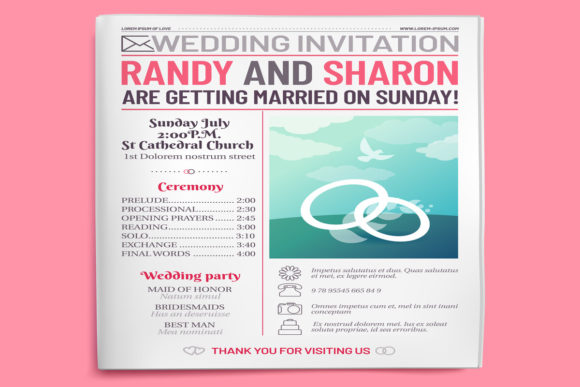
This isn't just another invitation template. It's a fully realized design concept that mimics the look and feel of a classic tabloid newspaper, complete with column layouts, serif headlines, and editorial-style illustrations. Whether you're a designer crafting something special for a client, a bride and groom looking for an unconventional way to announce your big day, or a small business owner seeking a distinctive editorial layout for a marketing campaign, this product delivers a visually rich starting point that feels both timeless and fresh.
What Makes This Newspaper-Style Layout Stand Out
The Wedding Invitation Tabloid is built around a compelling visual idea: what if your love story made the front page? The design draws on the aesthetics of old broadsheets and vintage tabloids, using structured columns, classic serif typefaces, and hand-drawn illustrations to create a layout that feels authentic without being dated. The result is a design asset that balances nostalgia with modern clarity.
At its core, the product includes a vector EPS10 file and a JPEG preview at 72ppi. The vector format means every element—every headline, every illustration, every decorative border—can be scaled, edited, and customized in a vector editor like Adobe Illustrator. Want to change the headline text? Swap out an illustration? Adjust the color palette to match a wedding theme? The file is built for exactly that kind of hands-on editing, giving designers full creative control without starting from scratch.
The layout itself is thoughtfully composed. It reads like a genuine newspaper front page, with a bold masthead, a lead story area, supporting columns, and smaller sidebar elements. There's space for a couple's names, the date, venue details, and even a short narrative about how they met. It's the kind of design that invites people to sit down and actually read the invitation rather than glance at it and toss it aside.
From Wedding Announcements to Brand Storytelling
While the name suggests weddings, the applications stretch far beyond save-the-dates. The newspaper tabloid format is a powerful storytelling device, and creative professionals are finding all sorts of ways to use it.
Event invitations are the obvious starting point. Engagement parties, rehearsal dinners, bridal showers, and anniversary celebrations all benefit from a layout that feels ceremonial yet playful. The tabloid format gives you room to include details that traditional invitations simply can't accommodate—directions, accommodation info, a timeline of the weekend, even a crossword puzzle themed around the couple.
Editorial design and publishing is another natural fit. If you're working on a magazine spread, a zine, or a blog feature about a wedding or love story, this template provides a ready-made framework. The column structure and headline hierarchy are already in place, so you can focus on content rather than layout mechanics.
Branding and marketing benefit from the same vintage editorial aesthetic. A small business launching a new product line could use the tabloid format for a special announcement flyer. A bakery might create a "front page" showcasing their wedding cake collection. A photographer could design a client welcome packet styled as a newspaper feature. The format carries an inherent sense of importance and occasion that makes any message feel more significant.
Social media graphics also work surprisingly well in this style. A single-column excerpt from the tabloid layout—perhaps just the headline and a key illustration—makes for an eye-catching Instagram post or Pinterest pin. The vintage aesthetic cuts through the noise of modern minimalist feeds, offering something tactile and warm in a digital space.
Designing with Intention: Typography and Visual Consistency
One of the strengths of the Wedding Invitation Tabloid is how well it demonstrates the relationship between typography and tone. The serif fonts used throughout the design evoke tradition, authority, and elegance—qualities that align perfectly with formal announcements and love stories. If you're working on a brand identity project, studying how this layout pairs different type styles can teach you a lot about font pairing and visual hierarchy.
The design uses a mix of display fonts for headlines and more readable serif or sans serif styles for body text. This contrast is fundamental to good editorial design. The headline grabs attention; the body text delivers the information. When you're choosing fonts for your own projects—whether it's a logo, a website, or packaging—this same principle applies. A premium font with strong display characteristics works beautifully for titles and headers, while a clean, highly legible typeface handles the longer reads.
Readability is worth emphasizing here. The tabloid layout is visually dense by nature, but the original design manages that density through generous spacing, clear column breaks, and a logical reading flow. If you're adapting this template for a different purpose, resist the urge to cram in too much text. Give your content room to breathe. White space isn't wasted space—it's what makes the difference between an invitation people admire and one they struggle to read.
Customizing the Template for Your Project
Because the product ships as a vector EPS10 file, customization is straightforward for anyone comfortable with Adobe Illustrator or a similar vector editor. You can separate elements, remove sections you don't need, recolor illustrations, swap fonts, and resize components without losing quality. This flexibility is what makes the template useful across such a wide range of projects.
Here are a few practical tips for getting the most out of the file:
- Start with the text. Replace placeholder text with your actual content before making any design changes. This helps you see how much space your story needs and where adjustments are necessary.
- Match the color palette to your theme. A quick color swap can transform the mood entirely. Soft blush tones feel romantic; deep navy and gold feel formal; black and white feels classic and editorial.
- Test your font choices at actual size. What looks elegant on a 27-inch monitor might be illegible when printed at invitation size. Print a test copy before committing.
- Consider your audience. A vintage newspaper layout appeals to people who appreciate craft and nostalgia. If your audience skews younger or more contemporary, you might modernize the design by simplifying some of the ornamental elements while keeping the core structure.
- Think about print vs. digital. If you're using this for a printed invitation, make sure your final file is set to 300dpi and CMYK color mode. For digital use, RGB and 72dpi work fine, but you'll want to optimize file size for web loading.
Beyond the Wedding: Unexpected Uses for a Tabloid Layout
Creative professionals often find that the best design assets are the ones that can be repurposed. The newspaper tabloid format is surprisingly versatile once you start thinking beyond its original context.
A restaurant could use it for a special menu announcement or a chef's table feature. A bookshop might create a literary event flyer styled as a broadsheet. A podcast launching a new season could design a promotional piece that looks like a newspaper profile of the host. A nonprofit planning a gala could use the tabloid format for both the invitation and the event program.
The format also works well for digital products. Think downloadable templates, printable wall art with a vintage editorial aesthetic, or even a styled PDF lookbook for an online shop. The vector source file makes it easy to adapt the design for multiple outputs, which is especially valuable if you're selling design assets or running a creative business where efficiency matters.
For marketers and content creators, the tabloid layout offers a fresh alternative to the standard social media template or email header. It carries an inherent sense of storytelling that invites engagement. People are drawn to formats that feel familiar but unexpected, and a newspaper-style graphic in a sea of modern minimalism is exactly that kind of visual surprise.
A Design Worth the Edit
The Wedding Invitation Tabloid isn't a finished product you download and use as-is—it's a creative foundation. The vector file gives you the freedom to make it your own, whether that means a simple text swap or a complete visual overhaul. What you're really getting is a well-crafted design system: a layout that understands editorial hierarchy, a visual language rooted in vintage charm, and enough flexibility to serve projects far beyond its original purpose.
For designers, it's a time-saver that doesn't sacrifice quality. For couples, it's a chance to announce their love story in a format that feels genuinely special. For business owners and creators, it's a reminder that sometimes the most effective way to stand out is to reach back—past the trends, past the templates everyone else is using—to a design tradition that has been capturing people's attention for centuries. The front page has always been where the most important stories live. Now it can hold yours.